I have had this book on my shelf and had not taken the time to link it to what I teach. First, I can see a clear connection to the structure of this story and point of view in writing. This could lead to any classroom constructed book, with each student contributing a piece of writing about the same event. I'm still percolating about the few chapters we have read---so will have to cogitate a little more on this. Phyllis
I have this book on audio and the students enjoy listening to the different voices (with accents). I usually introduce the book with a lesson on perspective. The vignettes in the beginning involve comments about what the little girl, Kim is doing in the vacant lot. I have to students watch me do something and then I ask them to write about what they say. I have them stand around me so some students see only my back. For those, I ask them to take a "guess" at what I'm doing. Then I have students read their short pieces and it's amazing the differences in what they saw.
After the book is finished, I ask the students to create a new "character" and write in the voice of that character. We also plan a community service project that they want to do.
I do need to address the snickers and giggles from hearing the different accents but I have found that if I talk to them explicitly about why they tend to giggle, it usually is a good discussion point at the end of the book. Most of the students are honest.
I would really like try something different next year My thought is to have several students read a particular "vignette". I think there are 13 different voices in the book. Then, before listening to the book, I'm thinking I would like them to describe to the rest of the class - who that character is using first person as if they were the character.
The image that stood out for me is that "community" is something that has to be worked on and maintained. At my school the sense of community exists but without constant feeding and watering it begins to die. After noticing growing apathy of both the students and staff, a group of teachers came together to discuss the idea of building stronger community connections at the school. We focused primarily those connections between Staff and students that will increase Pride in all aspects of the school. We are working throughout the summer and starting in the fall with some activities that we believe will help support our vision of a stronger "Viking Family".
I love the idea of having a community area. Wouldn't it be cool to have a "Front Porch" or a community garden.?
I'd like to think that my classroom has become the community garden at my school since I always have a room full of kids from all teams in my class before and after school. Having board games, drawing paper, and letting them write all over the board really helps. It's just fun to have a place where everyone can "hang".
I am absorbing all of the various ways that I can use this. My initial thoughts are that I would read parts of the book to students, have them make connections and then ask them what kind of book they would want to write as their community. This would be a really fun activity to do in the midst of learning about the Holocaust and something they would connect really well with.
I have the students write a personal narrative at the beginning of the year, which they present to the class. Following these presentations students respond with comments such as, "I had no idea that had happened to him," and "I didn't know that anyone else had gone through that." It's really a great experience that helps build our classroom community. After reading these excerpts I was thinking that maybe we could create some kind of compilation of students' stories to solidify and share the work we do in class.
I can already envision one activity that might work successfully with Seedfolks. After reading through some of the stories collectively (like we did today), I would have each of my students draw a picture of one of the images that may have stood out while reading through the selected stories. Another idea might be for the students to write a short fictional narrative about their own imagined experience ... By Doris R
I received a copy of this book at a SEED (Seeking Educational Equity and Diversity) professional development a few years ago. I was glad to see it used in this setting. I actually have the book on the bookshelf of our classroom library as an option for choice reading, but I also use it as a read aloud very much like how we used it today. It is a good wayt to prompt students to write about how each of them can contribute to the "growing" of our classroom garden. I want them to know that each of them is a contributor, and I try to guide them into being positive contributors. This is a great resource for facilitating the importance of everyone's voice being valuable.
This reminds me a little of what I do with The House on Mango Street, which is to separate into groups and discuss one (or all) of the stories. I also do an "Open Mind" exercise (anyone familiar?) and they turn out beautifully! I love the imagery and how each story ties into another. The theme is one of community--how one person's choices affect others--which is one of the messages when studying the Holocaust as well. It's important to learn about one another, to open our eyes and say "I see you." "You matter." *I also highly recommend the book Whirligig, also by Fleishman. Amazing!
Artistic students could create a storyboard with the images, add word bubbles for captions/dialogue.
Poetry--Select pieces of the story, the images that seem strongest, and clip (type or write) them, then arrange them on a page to form a poem.
Poetry--Select an image to be the first line of a poem you write.
Song--Take the poem you created and set it to music. Record it.
Select (x number of) images from the story and list them on the left side of you paper, which you've folded in half. On the right side, write images (descriptions of people, places, events) from your own life. Part 2 of this: Write your own story about seeds, nurturing, change, growth using the images you wrote in the right column of that paper.
I'm thinking about how to use this book as an opening for my English group in August. We can build the metaphor of teaching and "gardening" as an opening focus that will help us build community within the group....
Seeds: the metaphorical beginning of everything. From small, humble beginnings great things can grow. And it’s impossible to know the future impact of a tiny seed planted in hope. This book is so inspiring! I want to use it as a theme in my classroom next year. Especially tying into the theme of tolerance, it’s the small actions that matter the most in preventing intolerance BEFORE actions grow into hate.
Because I use the term, "we are all connected" in my classroom often, I can see where the stories from "Seeds" can support this philosophy. So often we stereotype people we meet before we really know anything about them and in the junior high this happens all the time. I can see where using "Seeds" during the first few weeks of class would support the feelings that I try to instill early in the year.
Our site has a community garden on campus. Each year it grows and more families join in the experience. This connection has brought our Hmong Community and our site together. I can easily see this book as a wonderful part of my curriculum and look forward to sharing it with my students. It never fails that food brings us together!
I like having the students choose one or two of the peoples and/or objects and make a personal connection to that person and/or object. I feel that making that personal connection helps solidify the lesson.
With my VAPA students I can have them act out their reactions. One of the classes we have talked about for our Ag teacher teach is a hortoculture class. If they have this class I will definately have him read this book, and suggest the garden, and then my home ec class can use the produce in our cooking projects.
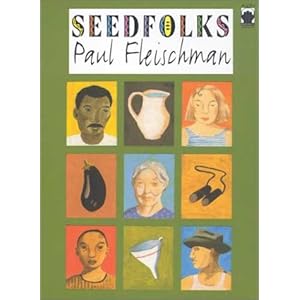


I have had this book on my shelf and had not taken the time to link it to what I teach. First, I can see a clear connection to the structure of this story and point of view in writing. This could lead to any classroom constructed book, with each student contributing a piece of writing about the same event.
ReplyDeleteI'm still percolating about the few chapters we have read---so will have to cogitate a little more on this.
Phyllis
I have this book on audio and the students enjoy listening to the different voices (with accents). I usually introduce the book with a lesson on perspective. The vignettes in the beginning involve comments about what the little girl, Kim is doing in the vacant lot. I have to students watch me do something and then I ask them to write about what they say. I have them stand around me so some students see only my back. For those, I ask them to take a "guess" at what I'm doing. Then I have students read their short pieces and it's amazing the differences in what they saw.
ReplyDeleteAfter the book is finished, I ask the students to create a new "character" and write in the voice of that character. We also plan a community service project that they want to do.
I do need to address the snickers and giggles from hearing the different accents but I have found that if I talk to them explicitly about why they tend to giggle, it usually is a good discussion point at the end of the book. Most of the students are honest.
I would really like try something different next year My thought is to have several students read a particular "vignette". I think there are 13 different voices in the book. Then, before listening to the book, I'm thinking I would like them to describe to the rest of the class - who that character is using first person as if they were the character.
Libby
I really want to read the entire story now!!!
ReplyDeleteThe image that stood out for me is that "community" is something that has to be worked on and maintained. At my school the sense of community exists but without constant feeding and watering it begins to die. After noticing growing apathy of both the students and staff, a group of teachers came together to discuss the idea of building stronger community connections at the school. We focused primarily those connections between Staff and students that will increase Pride in all aspects of the school.
We are working throughout the summer and starting in the fall with some activities that we believe will help support our vision of a stronger "Viking Family".
I love the idea of having a community area. Wouldn't it be cool to have a "Front Porch" or a community garden.?
ReplyDeleteI'd like to think that my classroom has become the community garden at my school since I always have a room full of kids from all teams in my class before and after school. Having board games, drawing paper, and letting them write all over the board really helps. It's just fun to have a place where everyone can "hang".
I am absorbing all of the various ways that I can use this. My initial thoughts are that I would read parts of the book to students, have them make connections and then ask them what kind of book they would want to write as their community. This would be a really fun activity to do in the midst of learning about the Holocaust and something they would connect really well with.
ReplyDeleteKarin
I have the students write a personal narrative at the beginning of the year, which they present to the class. Following these presentations students respond with comments such as, "I had no idea that had happened to him," and "I didn't know that anyone else had gone through that." It's really a great experience that helps build our classroom community.
ReplyDeleteAfter reading these excerpts I was thinking that maybe we could create some kind of compilation of students' stories to solidify and share the work we do in class.
I can already envision one activity that might work successfully with Seedfolks. After reading through some of the stories collectively (like we did today), I would have each of my students draw a picture of one of the images that may have stood out while reading through the selected stories. Another idea might be for the students to write a short fictional narrative about their own imagined experience ...
ReplyDeleteBy Doris R
I received a copy of this book at a SEED (Seeking Educational Equity and Diversity) professional development a few years ago. I was glad to see it used in this setting. I actually have the book on the bookshelf of our classroom library as an option for choice reading, but I also use it as a read aloud very much like how we used it today. It is a good wayt to prompt students to write about how each of them can contribute to the "growing" of our classroom garden. I want them to know that each of them is a contributor, and I try to guide them into being positive contributors. This is a great resource for facilitating the importance of everyone's voice being valuable.
ReplyDeleteThis reminds me a little of what I do with The House on Mango Street, which is to separate into groups and discuss one (or all) of the stories. I also do an "Open Mind" exercise (anyone familiar?) and they turn out beautifully!
ReplyDeleteI love the imagery and how each story ties into another. The theme is one of community--how one person's choices affect others--which is one of the messages when studying the Holocaust as well. It's important to learn about one another, to open our eyes and say "I see you." "You matter."
*I also highly recommend the book Whirligig, also by Fleishman. Amazing!
Using imagery in the Seedfolks stories --
ReplyDeleteArtistic students could create a storyboard with the images, add word bubbles for captions/dialogue.
Poetry--Select pieces of the story, the images that seem strongest, and clip (type or write) them, then arrange them on a page to form a poem.
Poetry--Select an image to be the first line of a poem you write.
Song--Take the poem you created and set it to music. Record it.
Select (x number of) images from the story and list them on the left side of you paper, which you've folded in half. On the right side, write images (descriptions of people, places, events) from your own life. Part 2 of this: Write your own story about seeds, nurturing, change, growth using the images you wrote in the right column of that paper.
Susan
I'm thinking about how to use this book as an opening for my English group in
ReplyDeleteAugust. We can build the metaphor of teaching and "gardening" as an opening focus that will help us build community within the group....
Pauline
Seeds: the metaphorical beginning of everything. From small, humble beginnings great things can grow. And it’s impossible to know the future impact of a tiny seed planted in hope.
ReplyDeleteThis book is so inspiring! I want to use it as a theme in my classroom next year. Especially tying into the theme of tolerance, it’s the small actions that matter the most in preventing intolerance BEFORE actions grow into hate.
Because I use the term, "we are all connected" in my classroom often, I can see where the stories from "Seeds" can support this philosophy. So often we stereotype people we meet before we really know anything about them and in the junior high this happens all the time. I can see where using "Seeds" during the first few weeks of class would support the feelings that I try to instill early in the year.
ReplyDeleteOur site has a community garden on campus. Each year it grows and more families join in the experience. This connection has brought our Hmong Community and our site together. I can easily see this book as a wonderful part of my curriculum and look forward to sharing it with my students. It never fails that food brings us together!
ReplyDeleteI like having the students choose one or two of the peoples and/or objects and make a personal connection to that person and/or object. I feel that making that personal connection helps solidify the lesson.
ReplyDeleteWith my VAPA students I can have them act out their reactions. One of the classes we have talked about for our Ag teacher teach is a hortoculture class. If they have this class I will definately have him read this book, and suggest the garden, and then my home ec class can use the produce in our cooking projects.